Key takeaways:
- Most moulding problems don’t start in the moulding machine. They begin before the material enters or after the part leaves. So when quality drops, check the auxiliary setup first instead of only adjusting the main machine.
- Bigger equipment is not safer equipment. An oversized dryer or chiller wastes energy and money, while an undersized one reduces quality. The right size comes from real numbers like hourly material use, scrap volume and heat load, not guesswork.
- A chiller and a mould temperature controller do different jobs. The chiller supplies cold water, while the MTC holds the mould at an exact temperature. Plants making engineering plastics, thin-wall or high-finish parts often need both.
- Scrap only saves money if it’s the right scrap. Mixing wrong colours, materials or contaminated waste into regrind can create more rejects than it saves.
- The setup works as a chain, so the weakest machine limits everything. Dry, Feed, Mould, Cool, Recover all depend on each other.
- Plan for tomorrow’s plant, not just today’s. A small factory does fine with separate units per machine, but a growing plant benefits from central feeding and cooling. Choosing with future expansion, spare parts and after-sales support in mind avoids costly replacements later.
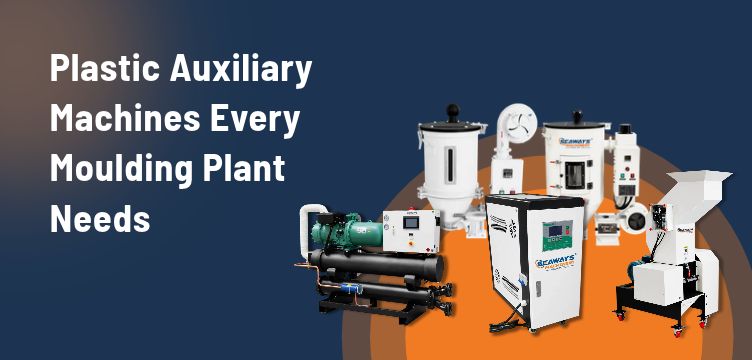
A moulding plant needs more than an injection moulding machine to produce consistent parts at the right speed. The five most useful plastic auxiliary equipment are a hopper dryer, hopper loader, plastic scrap grinder, industrial chiller, and mould temperature controller.
Together, they manage material drying, automatic feeding, scrap recovery, process cooling, and mould temperature. These machines help reduce waste, improve product quality, control cycle time, and keep production stable.
For molding plants, the top priority for the main molding machine should be maintaining the efficiency of using clean and dry raw materials, continuous cooling, controlled mold temperature, and the reuse of appropriate scrap generated during production.
Why Is Plastic Auxiliary Equipment Important?
The moulding machine does the main forming work, but many production problems begin before the material enters the barrel or after the part leaves the mould.
- Wet resin can create surface defects.
- Manual material handling can interrupt feeding.
- Scrap can increase material cost.
- Poor cooling can increase cycle time.
- Unstable mould temperature can affect dimensions and surface finish.
That is why auxiliary equipment is crucial for injection molding. Instead of placing the entire operational burden on the molding machine, it supports the overall production process. A well-planned setup can reduce the operator’s workload and simplify the monitoring of the production process.
Let us look at five machines that can make a significant difference in a modern molding plant.
1. Plastic Hopper Dryer
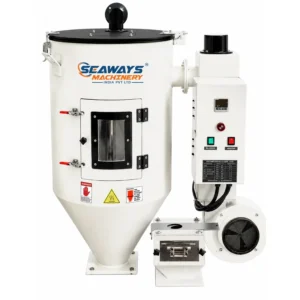
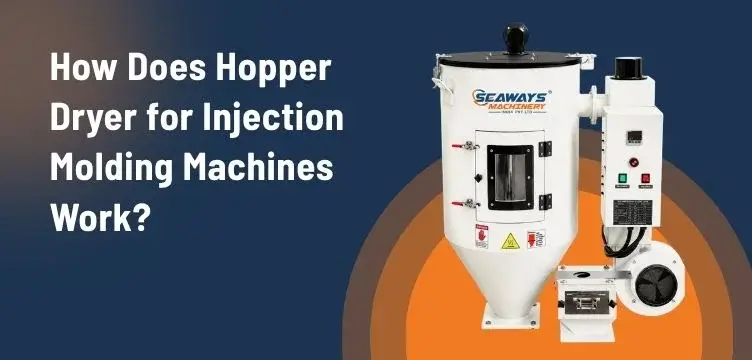
A plastic hopper dryer removes moisture from plastic granules before they enter the injection moulding machine, extruder, or blow moulding machine. This is especially important for moisture-sensitive materials such as PET, nylon, polycarbonate, ABS, and some engineering plastics. The hopper dryers for plastic processing available in different capacities and drying temperatures.
Why it matters:
Moisture in resin can lead to silver streaks, splay, bubbles, weak parts, poor surface appearance, and polymer degradation. Drying the material correctly helps the resin process more consistently.
For a moulding plant, the right hopper dryer should match the material, required drying temperature, batch size, and hourly consumption. An oversized dryer can waste energy, while an undersized unit may not provide enough drying time. Energy-efficient insulation is also useful because it can reduce heat loss during operation.
A good setup combines the hopper dryer with an automatic loader. This creates a more controlled flow from material storage to the moulding machine.
2. Vacuum Hopper Loader
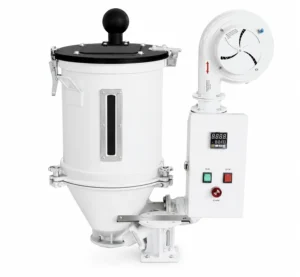
A hopper loader automatically transfers plastic granules from a storage container, dryer, or central material source to the processing machine. Instead of operators carrying bags and manually filling hoppers, a vacuum hopper loader handles the transfer through a conveying line.
Why it matters:
Automatic feeding saves operator time, reduces manual handling, and helps ensure a continuous supply of material. It can also minimize contamination associated with the open handling of granules.
This machine becomes even more valuable as the number of moulding machines increases. A small plant may use one loader for an individual machine, while a larger factory can use a central material handling system to serve multiple machines.
When selecting a hopper loader, consider factors such as conveying distance, material type, required throughput, power requirements, hopper capacity, and the number of machines to be supplied. Configure the system based on actual plant requirements.
3. Plastic Scrap Grinder Machine
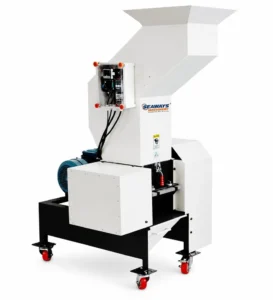
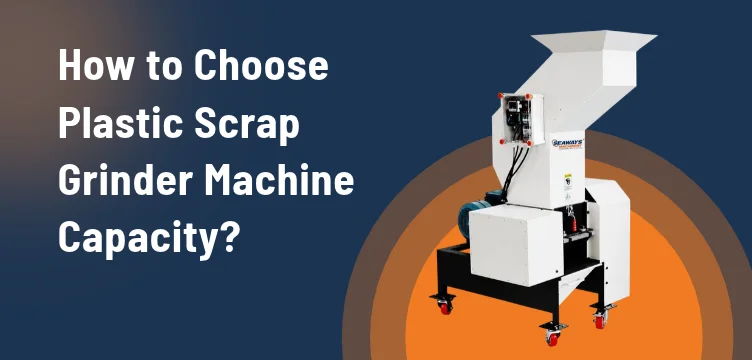
Plastic scrap is a normal part of moulding production. Runners, sprues, rejected parts, trimming waste, and other production scrap can take up valuable floor space if they are not handled quickly. A plastic scrap grinder reduces suitable plastic waste into reusable regrind.
The plastic scrap grinder machines are available in multiple sizes for applications including in-house moulding waste and larger recycling operations.
Why it matters:
Grinding suitable scrap can support material recovery, reduce waste sent out of the plant, and help lower raw material costs when the regrind can be correctly reused.
The important word is “suitable.” Not every scrap should be mixed or reused in the same way. Material type, colour, contamination, additives, and product quality requirements all need to be considered. A grinder should also be selected according to scrap size, hourly volume, desired particle size, and the plant’s recycling process.
A grinder placed close to the moulding machine can make scrap handling faster and keep the production area cleaner.
4. Industrial Chiller
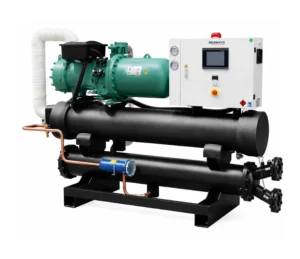
Temperature control is central to stable plastic moulding. An industrial chiller supplies controlled cooling water for moulds, process equipment, and other cooling loads. You can choose from water- and air-cooled industrial chillers for plastic processing, with models designed for different cooling capacities.
Why it matters:
Effective cooling helps remove heat from the mould and equipment during the process. Stable cooling supports repeatable cycle times, part quality, and plant productivity.
Without enough cooling capacity, the plant may face longer cycle times or inconsistent production. Conversely, selecting an oversized cooling system can lead to unnecessary costs.
Therefore, when selecting an industrial chiller, consider the size of the moulding machine, the number of machines, mould temperature requirements, ambient conditions, water temperature, and total heat load. Taking operating conditions into account, the size of the chiller should align with the actual process load.
A central chiller can be more advantageous in a multi-machine plant, as a properly designed cooling system can handle multiple production loads. Its final size depends on the plant layout and process requirements.
5. Mould Temperature Controller
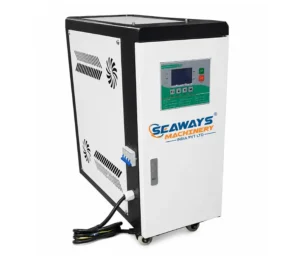
A mould temperature controller, or MTC, regulates the temperature of the mould by circulating a heat-transfer fluid through its cooling or heating channels. Unlike a chiller, which is mainly a source of chilled water, an MTC provides precise temperature control at the mould.
Why it matters:
Mould temperature influences polymer flow, the cooling process, part size, surface finish, and cycle stability. Maintaining the mould at a constant temperature helps minimize variations between production cycles.
MTCs are particularly useful when the process requires precise temperature control that standard cooling water cannot provide. Depending on the application, the system may need to heat the mould during start-up and maintain the target temperature during production.
When selecting a mould temperature controller, consider the material type, required temperature range, flow requirements, mould circuit design, and the number of zones. Precise control is especially beneficial for engineering plastics, thin-walled parts, components requiring high aesthetic quality, and products with tight tolerances.
How These 5 Plastic Auxiliary Machines Work Together
All these plastic auxiliary machines work together as a production system.
The hopper dryer prepares the resin by removing moisture, while the hopper loader automatically conveys the material to the processing machine. The mould temperature controller maintains the mould at the required processing temperature, whereas the industrial chiller provides the necessary cooling to continuously dissipate heat. After moulding, a scrap grinder is used to reduce the size of runners and reject plastic parts for reuse.
This flow creates a practical cycle:
Dry > Feed > Mould > Cool > Recover
The result is better material handling, more controlled processing, and less avoidable manual work.
How to Choose Plastic Auxiliary Equipment for Your Plant
The right machine isn’t necessarily the largest or the most expensive one; start by analyzing your production data.
First, identify the plastic materials to be used; different resins have distinct requirements regarding drying, temperature, and cooling. Next, calculate the hourly material consumption and the volume of scrap generated. Then, consider factors such as the number and size of moulding machines, cooling loads, operating hours, available space, and future expansion plans.
Pay attention to energy efficiency, ease of cleaning, maintenance access, controls, safety features, spare-part availability, and after-sales support. Additionally, the equipment should align with your plant’s layout and production targets.
For example, a plant running several injection moulding machines may benefit from central material handling and central cooling. A smaller moulding shop may prefer independent loaders, dryers, and compact cooling equipment.
Why Choose a Specialist Plastic Auxiliary Equipment Manufacturer?
Auxiliary equipment works best when it is correctly matched to the main moulding process. A specialist manufacturer can consider material type, machine capacity, plant layout, production volume, and cooling requirements before recommending a configuration.
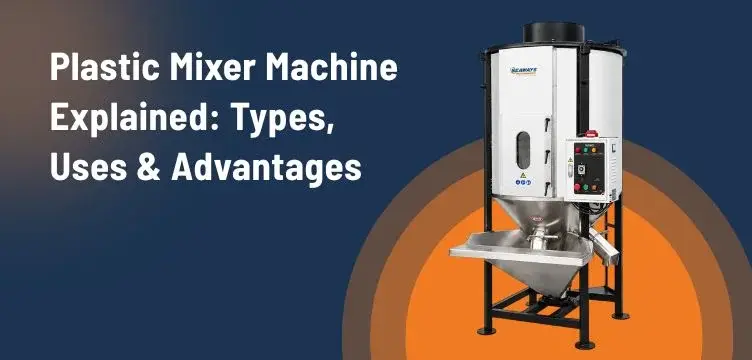
At Seaways Machinery, we provide plastic auxiliary equipment such as plastic scrap grinders, hopper dryers, vacuum hopper loaders, vertical batch mixers, mould temperature controllers, and industrial chillers. We also highlight installation, maintenance, and technical support across India.
Conclusion
A productive moulding plant needs more than a good moulding machine. The right plastic auxiliary equipment keeps material dry, moves resin automatically, recovers useful scrap, controls cooling, and maintains mould temperature.
The five key machines to consider are the plastic hopper dryer, vacuum hopper loader, plastic scrap grinder, industrial chiller, and mould temperature controller. Together, they can support better quality, smoother production, lower manual effort, and more efficient material use.
For plants planning to set up new facilities or upgrade existing ones, the best approach is to size each auxiliary equipment according to actual production requirements. Seaways Machinery offers a broad range of plastic auxiliary machinery and can help manufacturers select equipment based on their material, throughput, and moulding process.
You May Also Like: