Key takeaways:
- Online prices are usually “starting from” prices for the most basic model. GST (18%), packing, freight, loading and installation get added later. On a ₹5 lakh machine, GST alone adds ₹90,000. Always ask for one final “price” before you compare sellers.
- Cheap blades cost you more over time. Low-grade blades go dull fast. Dull blades crush plastic instead of cutting it. That means more dust, a higher electricity bill and lower output. A slightly costlier machine with D2 or high-chrome steel blades often turns out cheaper in the long run.
- Your profit depends on your scrap, not just your machine. As the example shows, thin carry-bag film is worth about ₹60 per kg, but processing it can cost even more than that. Rigid scrap like crates, pipes and moulded rejects usually earns better. Check what your scrap is worth before you pick a machine.
- Buy for the next 2 years, not just today, but don’t oversize. The grinder is only the entry point. A full 1 tonne/hour plant can cost ₹50 lakh to ₹1.5 crore. If you plan to add washing or pelletizing later, choose a grinder whose output fits that future line.
- A trial with your own scrap is the best test of a seller. Specs on paper can mislead. Some cheap machines carry a “30 HP” label on a much weaker motor. Ask to see the machine grind your actual material.
Let me guess why you’re here. You have plastic scrap piling up. It might be rejected moulded parts, old pipes, crates, or PET bottles. You know this scrap can make you money, and you are looking for a machine that can turn it into clean plastic pieces that you can sell or reuse.
Then you search for a price and get confused. One website shows a price of ₹50,000, while another shows ₹9 lakh. Both are selling what they call a “plastic scrap grinder machine.”
Don’t worry. Almost every first-time buyer we talk to starts in exactly this spot. So with this guide, we will explain in simple words how much you should pay for a plastic scrap grinder machine in 2026, why prices swing so much, and how to avoid costly buying mistakes.
What Does a Plastic Scrap Grinder Machine Do?
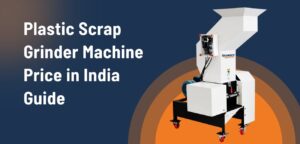
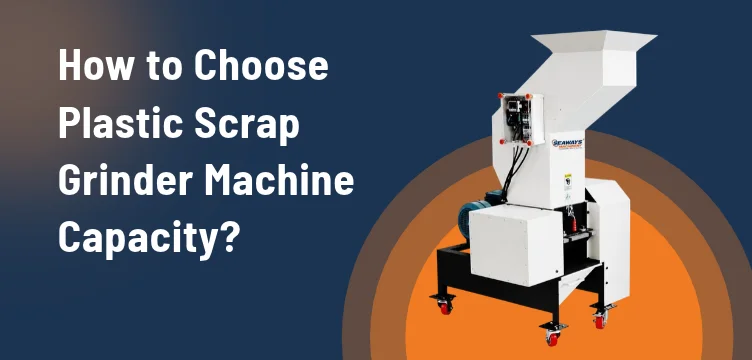
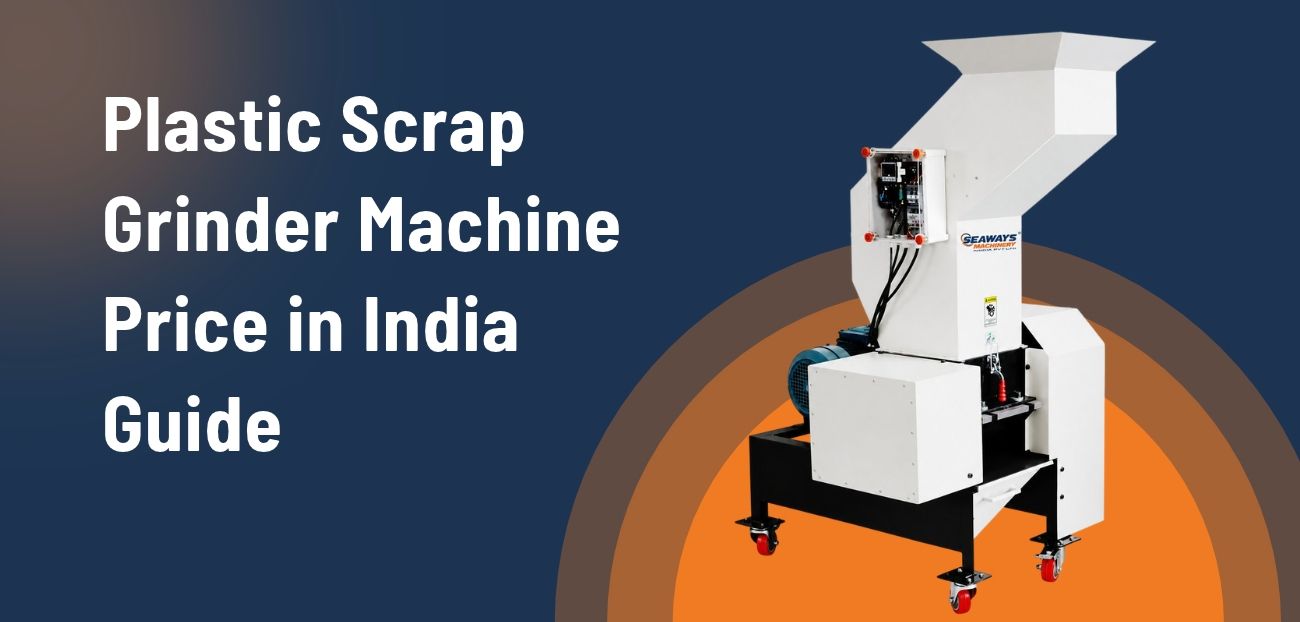
A plastic scrap grinder is also called a plastic crusher or granulator. It cuts large plastic waste into small, even pieces called regrind or flakes.
Inside, a rotor with sharp blades spins at high speed against fixed bed blades. The plastic is cut again and again until it is small enough to fall through a screen (a mesh plate with holes). The screen hole size decides how big your final flakes are.
You can then:
- Reuse the regrind in your own moulding or extrusion line.
- Sell it to recyclers or pipe makers.
- Send it to a washing line or pelletizer to make plastic granulate.
Plastic Scrap Grinder Machine Price in India 2026
Here is what the Indian market looks like right now. These are typical ranges based on current listings and quotes. Your final price will depend on build quality and features.
| Machine Size | Motor (HP) | Output (kg/hr) | Typical Price Range |
| Small (8-12 inch) | 3-7.5 HP | 20-80 kg/hr | ₹50,000 – ₹1.5 lakh |
| Medium (14-24 inch) | 10-30 HP | 100-350 kg/hr | ₹1.5 lakh – ₹4 lakh |
| Heavy duty (30 inch+) | 40-75 HP | 400-1,000 kg/hr | ₹2.5 lakh – ₹9.5 lakh+ |
Quick Tip: Don’t trust a listed price. Because online prices are often “starting from” numbers for the most basic version. One listing even shows a 32-inch HDPE grinder rated at 800 kg/hr for ₹2,60,000. That is far below what a true 800 kg/hr machine usually costs. Always ask what exactly is included.
7 Things That Decide the Plastic Scrap Grinder Machine Price
1. Blade size and cutting chamber
The cutting chamber is the “mouth” of the grinder. Its size decides how big a piece of scrap you can feed in without cutting it by hand first. A small 8-12 inch chamber is fine for bottles, caps and small moulding rejects. Whole crates, buckets, drums or thick pipe pieces need a 24-inch or larger chamber.
A bigger chamber needs more steel, a longer rotor, more blades and more precise machining, so the price climbs quickly. Don’t buy bigger than you need, though. If you only grind small rejects, a large chamber means paying extra for capacity that you never use.
2. Motor power (HP)
The motor is the heart of the machine. More HP gives more cutting force, so the grinder can chew through tough scrap without slowing down or jamming. It also gives higher output per hour. Hard, rigid materials like PVC pipes and thick HDPE parts need much more power than soft PP. An underpowered motor will trip often, overheat and wear out early.
Also check that the motor is a known brand and that its HP rating is real. Some low-cost machines carry a “30 HP” label on a motor that performs far weaker. Remember that a bigger motor also means a bigger electricity bill, so match the HP to your real workload.
3. Blade material
Blades are where cheap machines save money and where buyers lose it later. Low-grade blades go dull fast. Dull blades crush the plastic instead of cutting it, which makes dust, heats the material, raises power use and lowers output.
Good grinders use high-carbon, high-chrome tool steel or D2 steel. These blades cost more at first, but they stay sharp longer, can be re-sharpened many times and give clean, even flakes. Ask the seller three things: what steel the blades are made from, how many hours they run between sharpenings, and the price of a spare set.
4. Type of plastic you grind
Soft PP and HDPE are easy. PET bottles are hard on blades. Thin film tends to wrap around the rotor and often needs a different machine, such as an agglomerator. The more clearly you describe your scrap, the better the machine you’ll get. Show the manufacturer real samples, not just a description over the phone.
5. Rotor design
The rotor is the spinning shaft that holds the blades, and its design changes how the machine cuts:
- Open rotors let more air flow through the chamber, which keeps heat low. They suit heat-sensitive plastics and lighter scrap.
- Closed or solid rotors are heavier and stronger. They handle thick, heavy parts like lumps, purgings and thick-walled pipes.
- Staggered (scissor-cut) rotors cut gradually, much like scissors, rather than chopping all at once. This lowers shock on the motor, reduces noise and gives more even flakes.
The right rotor saves power, protects your blades and improves flake quality. And the wrong one wastes all three, so ask the maker why they recommend a certain rotor for your scrap.
6. Automation and add-ons
A basic manual grinder has a hopper, a cutting chamber and a screen, and a worker feeds it by hand. It costs the least. Here, the add-ons raise the price but often pay for themselves:
- Blower and cyclone suck the flakes out and drop them straight into bags, with no manual scooping.
- Conveyor belt feeds scrap steadily, which suits high-volume units.
- A noise hood or soundproof cabin cuts the loud noise of grinding and protects your workers’ hearing.
- Overload protection and safety switches stop the motor if it jams or if the hopper is opened.
If labour is costly or you run long shifts, these extras are usually worth it. If you’re just starting small, a basic machine is a sensible first step, and you can upgrade later.
7. GST and transport
This is where many buyers get an unpleasant surprise. Many listed prices are shown before tax. For example, one 50 kg/hr plastic scrap granulator is listed at ₹1,18,000, which is a ₹1,00,000 base price plus 18% GST. On a ₹5 lakh machine, that same 18% adds ₹90,000.
Then come other costs that are easy to miss:
- Packing for safe transport.
- Freight, which goes up with machine weight and distance.
- Loading and unloading at your site.
- Installation and trial run by the maker’s technician.
Before you compare two quotes, ask each seller for one final “landed price” that covers the machine, GST, packing, freight and installation. Only then can you compare the quotes fairly.
Real Lessons From Real Recycling Units
People learn more from stories than from specs, so here are three real cases with lessons that apply to you.
Case 1: The scrap was worth less than the work (Dharavi, Mumbai)
Dharavi is one of India’s busiest recycling hubs. One report from there points out that each small carry bag weighs only 5 to 7 grams, 1 kg of this material is barely worth ₹60, and processing it costs more than ₹60.
Lesson: Before you buy any machine, check the value of your scrap. Rigid scrap like crates, pipes and moulded rejects usually gives better returns than thin film. Pick your grinder around profitable material.
Case 2: Capacity and space must match (Chennai)
A Chennai recycling business that was listed for sale showed real numbers. It had a capacity of 70 tons a month and turned waste plastic into granules, mainly for pipe and plastic product makers. It ran from a rented 7,200 sq ft unit, with a 5,400 sq ft shed and 1,800 sq ft of open land.
Lesson: Output is not just about the machine. You need room to store incoming scrap and finished regrind. A 500 kg/hr grinder in a small shed will sit idle while workers shift bags around.
Case 3: The grinder is a small part of a full plant
Industry estimates say a 1 tonne per hour recycling plant in India needs ₹50 lakh to ₹1.5 crore, while the granulator alone costs about ₹3 lakh to ₹8 lakh.
Lesson: The grinder is your entry point. If you plan to grow into washing and pelletizing later, buy a grinder whose output matches the future line. Then you won’t need to replace it in two years.
Hidden Costs Most Buyers Forget
Experienced buyers look past the machine price. Budget for these too:
- Spare blade set: Keep at least one extra set so work never stops.
- Blade sharpening: Plan for regular grinding of blades, depending on material and hours run.
- Electricity: A 30 HP motor running 8 hours a day adds up quickly. Ask for real power use per kg.
- Foundation and wiring: Heavy machines need a solid base and proper three-phase supply.
- Screens: You may need different screen sizes for different customers.
- Licences: Plastic recycling units need pollution board consent and other approvals. For funding, government schemes such as PMEGP may support eligible MSME projects with a subsidy, subject to conditions.
How to Choose the Right Plastic Grinder: A Simple Checklist
Ask yourself, and the seller, these questions before you pay:
- What plastic will I grind most: PP, HDPE, PVC, PET, or mixed?
- How many kg do I need per hour, today and in two years?
- What is the biggest piece of scrap I will feed in?
- What flake size does my buyer want?
- What steel are the blades made from, and how often do they need sharpening?
- Is the motor a known brand, and is it the true HP?
- Does the price include GST, transport, and installation?
- What warranty and after-sales service do I get?
- Can I see the machine run, or watch a trial with my own scrap?
That last point matters most. Always ask for a trial with your own material. A good manufacturer will happily show you. A seller who avoids answering it, better to stay away from that.
Why Buy Directly From a Manufacturer
When you buy from a trader, you often pay a markup and get slow service. When you buy directly from a manufacturer like Seaways Machinery, you get:
- Fair factory pricing without middlemen.
- A machine sized to your scrap and output, not a one-size-fits-all model.
- Direct access to spare blades, screens and service.
- Honest advice from people who build these machines every day.
If you’re unsure which size fits your business, talk to our team. Share your scrap type and daily volume, and we’ll suggest the right plastic scrap grinder with a clear, all-inclusive quote.
Final Thoughts
A plastic scrap grinder is more than a machine. It’s the first step in turning waste into steady income. The cheapest quote is rarely the best deal, but the most expensive one isn’t always right for you either.
The best machine fits your scrap, your space and your growth plans, and it comes from someone who will still pick up your call after the sale.
Ready to find yours? Contact Seaways today for a free consultation and a quote built around your business.
You May Also Like: