Key Takeaways:
- Moisture is often blamed on the wrong thing. Defects like silver streaks, bubbles, or weak parts look like machine problems, but they’re usually a drying problem in disguise.
- Overheating is just as bad as under-drying. Too high a temperature doesn’t just dry the plastic faster, it can degrade the material itself, so more heat isn’t automatically better.
- A dryer is only as good as how it’s operated. Overloading the hopper, ignoring residence time, or skipping filter/heater maintenance can affect a dryer’s effectiveness.
- Visual checks can substitute for lab equipment. If you don’t have a moisture analyzer, checking for splay marks, bubbles, or brittleness in the finished part is a practical way to catch drying failures.
- Energy efficiency and part quality are linked. Insulated hopper dryers aren’t just about saving power. Better heat retention also means more consistent drying results, which ties directly back to fewer rejects.
If you work with plastic processing, you already know that even a small amount of moisture in your raw material can ruin a perfectly good production run. Silver streaks, bubbles, weak parts, and rejected batches are often not a machine problem at all, they’re a moisture problem. This is exactly where a hopper dryer for injection molding machines comes in.
A hopper dryer sits right before the injection molding process and makes sure the plastic resin going into the machine is completely dry. But how does it actually do that?
In this guide, we’ll break down what a hopper dryer is, why it matters, and exactly how it works.
What is a Hopper Dryer?
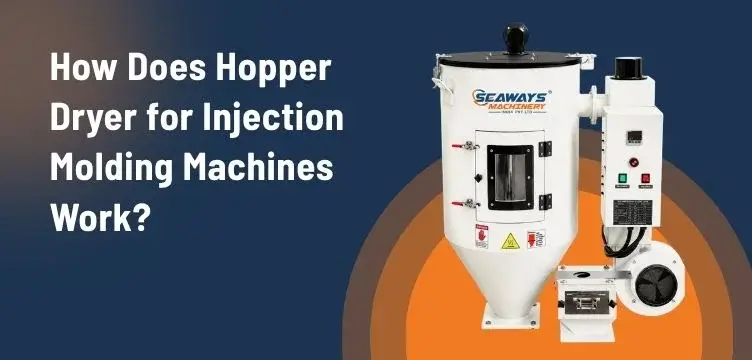
A hopper dryer is a plastic auxiliary equipment that removes moisture from plastic granules before they enter an injection molding machine. It looks like a large cone-shaped or cylindrical container, usually mounted directly above the molding machine or placed close to it.
Inside, the dryer uses hot air to heat the plastic material and pull out any trapped moisture. Once the resin is dry, it flows down through the hopper and directly into the barrel of the injection molding machine, ready for processing.
Why Drying Plastic Resin Before Injection Molding Matters
Not all plastics behave the same way with moisture. Some hygroscopic materials (like nylon, PET, PC, and ABS), absorb more moisture from the air around them, even while in storage. Other non-hygroscopic materials only carry surface moisture. Either way, moisture needs to go before the material reaches the injection molding machine.
Here’s what happens if it doesn’t:
- Splay marks and silver streaks appear on the finished part’s surface.
- Bubbles or voids form inside the molded product, weakening it.
- Hydrolysis breaks down the plastic’s molecular chains, especially in materials like nylon and PET, making parts brittle.
- Inconsistent shrinkage leads to dimensional problems and poor-fitting parts.
- Higher rejection rates, which means wasted material, time, and money.
A good hopper dryer solves all of this by making sure the moisture content of the resin is brought down to a safe level before it’s melted and injected into the mold.
Key Parts of a Hopper Dryer
To understand how a hopper dryer works, it helps to know its main parts:
- Drying hopper (chamber): The main container that holds the plastic granules during drying.
- Heater: Warms the air that flows into the hopper.
- Blower/fan: Pushes the heated air through the material bed.
- Air distribution cone: Spreads the hot air evenly so every granule dries at the same rate.
- Temperature sensor: Monitors and controls the drying temperature throughout the cycle.
- Control panel: Lets the operator set temperature, time, and airflow. Many modern units use a PID controller for precise, stable results.
- Insulated walls: Reduce heat loss and improve energy efficiency (found in insulated or energy efficient hopper dryer models).
- Sight glass and slide gate: Let operators check material levels and control the flow of dried resin into the molding machine.
How a Hopper Dryer Works: Step-by-Step
Here’s the actual working process of a hopper dryer for injection molding machines, from start to finish:
- Loading the resin: Plastic pellets or granules are loaded into the top of the hopper, either manually or automatically through a loader.
- Heating the air: The heater warms the incoming air to a set drying temperature, which depends on the type of plastic being processed.
- Circulating hot air through the material: A blower pushes this hot air upward or downward through the hopper, passing it through the bed of resin. The air distribution cone ensures the heat reaches every part of the chamber evenly.
- Moisture evaporation: As hot air moves through the plastic granules, it absorbs the moisture trapped inside and on the surface of the material.
- Moist air exhaust: The now-humid air is pushed out of the hopper through an exhaust vent, carrying the moisture away from the resin.
- Continuous monitoring: Temperature sensors and timers keep the drying process consistent, holding the exact temperature and duration needed for that specific plastic material.
- Feeding dry material to the machine: Once the resin reaches the required dryness, it flows down through the slide gate into the injection molding machine’s barrel, ready to be melted and shaped into the final product.
This entire cycle repeats continuously during production, so the injection molding machine always has a steady supply of properly dried material.
Types of Hopper Dryers Used in Injection Molding
There are a few common types of hopper dryers, and choosing the right one depends on your material and production needs:
- Hot air hopper dryers: Use ambient or slightly heated air. Suitable for non-hygroscopic plastics like PP or PE that only need surface moisture removed.
- Insulated hopper dryers: Have insulated walls to retain heat better, improving energy efficiency and giving more consistent drying results. It’s ideal for continuous production lines.
- Desiccant hopper dryers: Use desiccant beads to produce extremely low dew point dry air, making them the right choice for highly hygroscopic materials like nylon, PET, and PC that need deeper moisture removal.
- Non-insulated hopper dryers: A simpler, cost-effective option, often used for materials that don’t need very precise or deep drying.
Depending on your resin type and output requirements, a manufacturer can help you pick between a standard energy efficient hopper dryer or a desiccant-based system.
Choosing the Right Drying Temperature and Time
Every plastic resin has its own ideal drying temperature and time. Using the wrong settings can either leave the material damp or damage it through overheating. As a general guide:
- ABS: Around 80-90°C for 2-4 hours
- Polypropylene (PP): Around 80-100°C for 1-2 hours
- Nylon (PA): Around 80-100°C for 4-6 hours (highly hygroscopic)
- Polycarbonate (PC): Around 110-120°C for 3-4 hours
- PET: Around 140-170°C for 4-6 hours
These numbers can vary based on the resin grade and manufacturer recommendation, so it’s always best to check the material data sheet or consult your equipment supplier for exact settings.
Common Mistakes That Hurt Drying Efficiency
Even with a good hopper dryer, poor operating habits can affect results. Watch out for:
- Overloading the hopper, which blocks even air circulation.
- Setting the wrong temperature, either too low to dry properly or too high, which degrades the plastic.
- Ignoring residence time, so material is used before it’s fully dried.
- Skipping regular maintenance on filters, heaters, and blowers, which reduces drying performance over time.
- Not monitoring dew point in desiccant dryers, leading to inconsistent moisture removal.
Benefits of Using a Reliable Hopper Dryer
Investing in a good-quality hopper dryer for your injection molding machine pays off in several ways:
- Fewer moisture-related defects and rejected parts.
- Better surface finish and mechanical strength in final products.
- Lower energy consumption with insulated, energy efficient hopper dryer models.
- Longer machine life due to consistent, controlled operation.
- More stable, repeatable production cycles.
If you’re looking for dependable plastic auxiliary equipment, Seaways Machinery’s range of hopper dryers is designed to deliver consistent drying performance while keeping energy costs low.
Conclusion
A hopper dryer might look like simple equipment, but it plays a critical role in the injection molding process. By removing moisture from plastic resin before it reaches the machine, it directly protects your part quality, reduces waste, and keeps your production running smoothly.
If you’re setting up a new production line or looking to upgrade your current drying setup, Seaways Machinery offers a range of hopper dryers built for reliable, energy-efficient performance. Get in touch with our team to find the right drying solution for your material and output needs.
You May Also Like: