
Key Takeaways:
- A mixer won’t fix bad dosing or wet material. It only spreads the ingredients evenly. If the masterbatch ratio is wrong or the plastic isn’t dried properly, you’ll still get defects, so good results depend on correct formulation, mixing time, and handling.
- Overloading and underfilling both hurt mixing quality. The right size is the one that fits your daily production and keeps up with your moulding or extrusion line without slowing it down.
- Easy cleaning matters as much as capacity. Plants that change colours often lose time and quality if the mixer is hard to empty. Leftover material, especially when switching from a dark colour to a light one, can spoil the next batch.
- Recycled material needs checking before mixing. Regrind can vary in size, colour, and properties. The safe amount to add depends on what your final product requires.
- A vertical mixer is not a compounding machine. It’s good for pre-blending granules, but powders, fibres, or high-filler recipes need high-shear or dedicated equipment. Tell the supplier your exact materials before you buy.
A vertical color mixer helps plastic manufacturers blend color masterbatch, plastic granules, regrind, and additives into a consistent batch before production. It is widely used in injection moulding, plastic extrusion, compounding, and recycling operations where material consistency can affect the appearance and quality of the finished product.
Choosing the right mixer depends on the type of plastic you process, your batch size, your production requirements, and how often you change materials or colors. Knowing where these machines will be used makes it easier to select one that fits your factory and daily production needs.
In this guide, we will explore the main industries that use vertical color mixers. Then we discuss the factors manufacturers should consider before buying one.
What Does a Vertical Color Mixer Do?
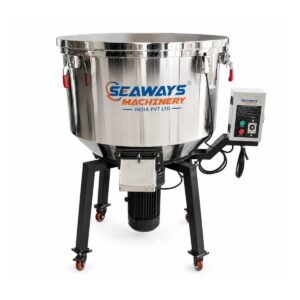
A vertical color mixer is a plastic processing machine that blends free-flowing granules in an upright chamber. A motor-driven mixing element circulates the material so base resin, colour masterbatch and compatible additives are more evenly distributed before moulding or extrusion.
Poor blending can contribute to colour streaks or shade differences. It can help maintain regrind ratios, but does not replace accurate dosing or drying.
Top 6 Vertical Color Mixer Applications
1. Injection Moulding Industry
Injection moulding is one of the most common applications for a vertical plastic color mixer. Manufacturers blend resin pellets with masterbatch and, where suitable, regrind before feeding the mix into an injection moulding machine. Typical materials include polypropylene (PP), polyethylene (PE), ABS and other thermoplastics.
The process produces storage boxes, caps, containers, toys, appliance parts, electrical housings and industrial components. Many are made in several colours, so a small shade difference can be noticeable across a batch.
A vertical batch mixer supports more consistent colour and material ratios between moulding cycles. It can also help plants that switch colours during a shift, especially when the machine is straightforward to empty and clean between runs.
2. Plastic Extrusion
Extrusion lines turn prepared plastic into continuous products such as pipes, profiles, sheets, and films. A consistent feed blend helps maintain uniform appearance and material composition throughout a run.
A vertical batch mixer blends resin with colour masterbatch, regrind, or compatible additives before the mix enters an extruder. It is useful when a plant prepares defined batches rather than relying entirely on dosing equipment at the machine.
Consider the line’s hourly material use and how often another batch must be prepared. The mixer should fit the production schedule without creating a bottleneck.
3. Masterbatch and Colour Blending
Masterbatch is a concentrated blend of pigment or additives carried in a polymer base. Manufacturers combine it with natural plastic granules to achieve the required shade or additive level in the finished product.
A plastic color mixer helps distribute masterbatch throughout the batch. This supports consistent colour from one run to the next when the formulation, dosing ratio, mixing time, and handling method are also controlled.
Colour changes need care. So, operators should follow a defined cleanout procedure and check for material left in the chamber or discharge area, especially when changing from a dark shade to a light one.
4. Plastic Recycling and Regrind Mixing
Recycling operations use a vertical batch mixer to combine reprocessed plastic granules with virgin resin in a planned ratio. This helps incorporate reclaimed material into production when the material grade and final product requirements allow it.
Consider product specification and process to decide regrind proportion. Recycled feed can vary in size, colour, and properties, so operators should check its quality and compatibility with the base resin.
For recycling, choose a mixer that is easy to load, discharge, inspect, and clean. Capacity should reflect both the available regrind and the downstream machine’s consumption.
5. Plastic Compounding
Plastic compounding combines a base polymer with ingredients such as fillers, colourants, and processing additives. A vertical batch mixer supports preliminary blending when ingredients need to be distributed before the material moves to another machine.
Match the mixer to the material and required mixing action. Some formulations need specialised high-shear equipment or a dedicated compounding system, so do not assume a vertical batch mixer replaces a complete compounding line.
6. Packaging and Everyday Plastic Products
Manufacturers of containers, lids, closures, storage items, and selected film or sheet products use colour blends to create a consistent appearance across production runs.
The right mixer depends on the polymer, amount of colour concentrate, and control needed for each batch. For plants that switch products often, a manageable batch size and easy cleaning may matter as much as maximum capacity.
Why Do These Industries Choose Vertical Color Mixers?
Across these applications, manufacturers typically look for several practical advantages:
- More consistent colour blending: supports lower shade variation when materials and settings are correctly matched.
- Repeatable batch preparation: helps keep ratios of virgin resin, masterbatch and approved regrind consistent.
- Flexible changeovers: useful for plants handling different colours or products.
- Space-conscious installation: the vertical layout can fit into production areas with limited floor space.
- Simpler handling: an accessible chamber, removable mixing element and suitable discharge make unloading and cleaning easier.
How to Choose a Vertical Color Mixer for Your Industry
Before buying a vertical batch color mixer, assess the materials and production schedule rather than choosing by capacity alone.
- Confirm material type. List the resin, masterbatch, regrind and additives. Mention any powders, fibres or high filler content.
- Match batch capacity to demand. Choose a size that fits your production size without routinely overloading the machine or leaving it underfilled.
- Review cleaning and changeovers. Frequent colour changes make easy discharge and accessible internal components especially useful.
- Check the downstream process. Injection moulding, extrusion and blow moulding have different throughput needs, and the mixer must keep pace with the line.
- Ask about service and options. Verify motor capacity, power requirements, spare parts, cleaning procedure and options such as automatic loading.
For more information about mixer types and their differences, read our blog: horizontal vs vertical plastic color mixer buying guide.
Conclusion
Vertical color mixer applications cover many parts of the plastics value chain, from moulded consumer products and packaging to extruded pipes, industrial components and recycled goods. The machine’s role is to prepare a more consistent blend before material reaches the main production equipment.
The right model depends on resin type, additives, batch size, colour-change frequency and downstream throughput. Review these needs before choosing a machine, and explore our vertical batch mixer range to see whether it fits your production process.
You May Also Like: