Key Takeaways
- Your scrap is not waste, it is material you already paid full price for. Selling it out means losing roughly ₹70 on every ₹100.
- Choose capacity from your actual scrap per hour, not by picking the biggest machine.
- Clean factory scrap can skip washing entirely. Don’t buy equipment you don’t need.
- Moisture is the biggest hidden enemy. Wet material turns into steam inside the extruder and gives bubbles, streaks and brittle parts.
- Dull blades don’t just cut slowly, they tear the plastic and create dust and heat that jams the extruder later.
- One steel bolt can damage a hardened blade in seconds. Metal checking before grinding is cheaper than blade replacement.
- 100% regrind is not the goal. 20-30% regrind with 70-80% virgin is the safe working ratio for strength-sensitive parts.
Every plastic factory in India wastes money every day and most owners never pay attention to this.
Look at the floor near your injection moulding machine. Those rejected parts, runners, sprues and trimmed edges are not waste. They are raw material you already paid full price for. If that scrap leaves your plant in a sack, you are selling ₹100 material for ₹30 and buying fresh granules again next week.
A plastic recycling machine breaks that loss-making cycle. It takes your scrap, cuts it, cleans it, dries it and turns it back into usable material.
But before you invest in one, you should understand how it actually works. The real, step-by-step working principle. That is exactly what this guide explains. Whether you are a plastic manufacturer, recycling business owner or someone planning a recycling plant, this guide will help you understand the complete process.
What Is a Plastic Recycling Machine?
A plastic recycling machine converts plastic waste into reusable material, either as regrind (small flakes) or as granules/pellets (uniform beads).
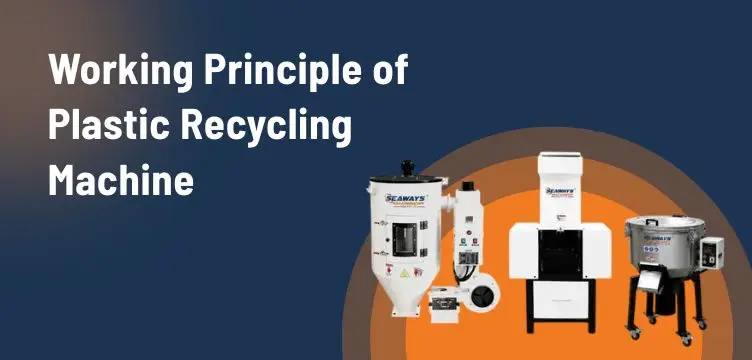
It is not one single machine. It is a line of connected equipment, where each unit does one job and passes the material to the next. A small unit may only grind scrap. A full recycling line will grind, wash, dry, melt and pelletize.
The material types normally processed include PP, PE, HDPE, LDPE, PVC, PET, ABS and PS.
The Working Principle in One Line
The basic principle is simple. Reduces the size of plastic waste, removes everything that is not plastic, then reshapes the clean plastic into a form your machine can feed again.
Every step you see below exists to serve one of those three goals — size reduction, contamination removal, or reshaping.
Step-by-Step Working Principle of a Plastic Recycling Machine
Step 1: Collection and Sorting
Recycling starts before the machine. Scrap is separated by plastic type and, where quality matters, by colour.
This step is critical because different plastics melt at different temperatures. If PP is mixed with PET, the PET will not melt properly and will sit inside the melt as hard, unmelted lumps. The result is a weak product and a blocked screen.
Metal pieces, paper labels, and dirt are removed here as well. A single steel bolt entering a grinder can chip a hardened blade in seconds.
Step 2: Feeding and Conveying
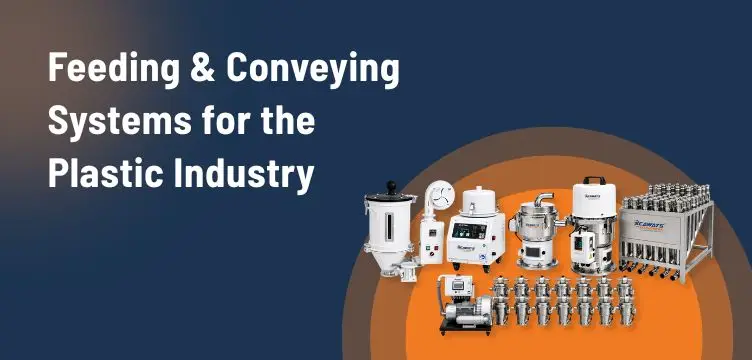
Sorted scrap is fed into the machine. Small units are fed by hand. Larger lines use a conveyor belt or a hopper loader that lifts material automatically into the hopper using vacuum suction.
Automatic feeding matters more for large factories. It keeps the flow of material steady, and a steady flow means a steady motor load. Uneven feeding causes surging, spikes in power consumption and inconsistent output size.
Step 3: Grinding and Granulating
This is the heart of the process.
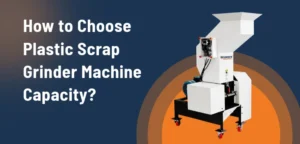
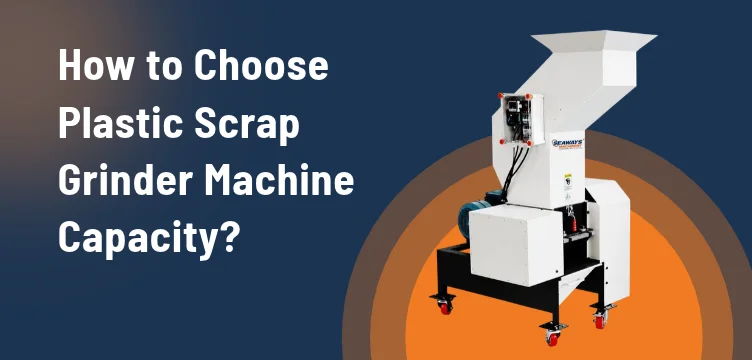
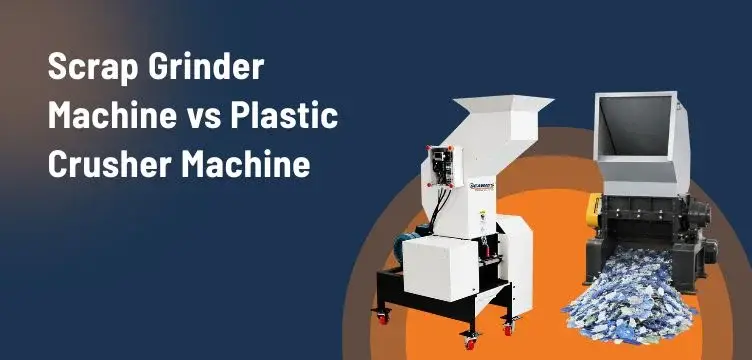
Inside a plastic scrap grinder machine, a heavy rotor spins at high speed. Rotor blades are fixed around this shaft. Fixed blades called stator blades are mounted on the chamber wall.
When plastic enters the cutting chamber, it is caught in the gap between the rotating blade and the fixed blade. The material is sheared, exactly like a pair of scissors closing. This happens hundreds of times per second.
Below the rotor sits a screen mesh with round holes. Cut pieces stay inside the chamber and get cut again and again until they are small enough to fall through the holes. This is the clever part of the design, the screen decides your final flake size.
- Screen with 6 mm holes > coarse regrind, higher output
- Screen with 3-4 mm holes > fine regrind, lower output, better remelting
So if you want smaller flakes, you change the screen.
Step 4: Washing (Only for Contaminated Scrap)
Clean in-house factory scrap usually skips this step. Post-consumer waste like bottles, crates, drums, agricultural film — does not.
Flakes go into a washing tank. Here a simple law of physics does the sorting for you. PP and PE float in water, while PET and PVC sink. Friction washers then scrub off oil, mud and glue residue.
Step 5: Drying and Dehumidifying
Washed flakes carry surface water. Even unwashed regrind absorbs moisture from humid air. It’s a serious issue during the monsoon in India.
Moisture is the silent killer of recycled plastic quality. When wet material enters a hot extruder, the trapped water turns into steam instantly. That steam creates bubbles, silver streaks, brittle parts and hollow pellets.
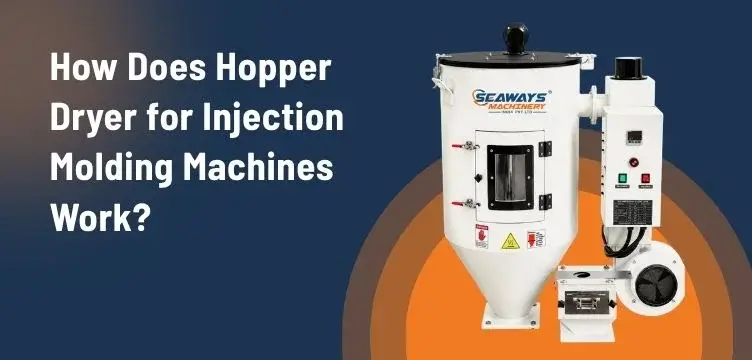
A hopper dryer solves this. Hot air is blown through the material inside an insulated hopper for a set period, pulling moisture out before the plastic ever reaches the melting stage.
Typical target – below 0.02% moisture for engineering plastics.
Step 6: Mixing and Dosing
Dried regrind is rarely used at 100%. Most manufacturers blend it with virgin granules to protect final product strength.
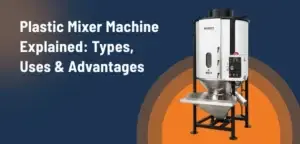
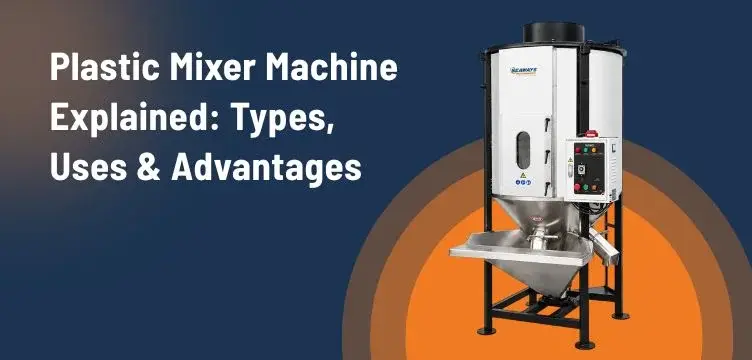
A vertical batch mixer blends regrind, virgin material, masterbatch colour and additives into one uniform batch. Uniform mixing here means uniform colour and consistent strength in your final product.
A common, safe starting ratio is 20-30% regrind with 70-80% virgin material.
Step 7: Melting and Extrusion
For pellet production, blended material enters the extruder.
A long rotating screw sits inside a heated barrel. As the screw turns, it does three jobs at once:
- Conveys the material forward
- Compresses it, generating friction heat
- Mixes it into an even melt
Barrel heaters raise the temperature into the melting range of that specific polymer. The melt is then pushed through a fine filter screen, which traps any remaining unmelted particles or dirt.
Finally, the clean melt is forced through a die head with small holes, coming out as continuous plastic strands – like thin noodles.
Step 8: Cooling and Pelletizing
Hot strands pass through a water bath or air cooling section, where they harden. An industrial chiller is normally used to keep water temperature stable, because inconsistent cooling produces soft or deformed pellets.
The cooled strands then feed into a pelletizer, where a rotating cutter chops them into uniform granules of 2-4 mm.
These granules are dried once more, then bagged and stored. Now its ready to go straight back into your moulding or extrusion machine.
Key Components at a Glance
| Component | Function |
| Hopper / Loader | Feeds scrap into the machine |
| Rotor & Stator Blades | Shear and cut plastic |
| Screen Mesh | Controls final flake size |
| Hopper Dryer | Removes moisture before melting |
| Batch Mixer | Blends regrind, virgin and colour |
| Extruder Screw | Melts and homogenises material |
| Die Head | Forms plastic strands |
| Chiller / Water Bath | Cools strands |
| Pelletizer | Cuts strands into granules |
What Decides Output Quality?
Four things control the quality of your recycled material:
- Blade sharpness. Dull blades tear plastic instead of cutting it. This creates dust, heat and fine powder that jams the extruder.
- Screen size selection. Wrong hole size gives either oversized flakes or unnecessary heat build-up.
- Moisture level. Anything above the recommended limit shows up as visible defects.
- Motor and rotor capacity. An undersized motor stalls under load and burns out over time.
Common Mistakes to Avoid
- Feeding scrap faster than the rated kg/hr capacity.
- Ignoring metal detection before grinding.
- Skipping drying because scrap “looks dry”.
- Mixing different polymer types in one batch.
- Delaying blade sharpening until output visibly drops.
Turn Your Scrap Back Into Profit
Once you understand the working principle, the choice becomes practical rather than technical. You simply match the machine to your material, your volume and your available space.
Seaways Machinery has manufactured plastic auxiliary and recycling equipment from Rajkot, Gujarat since 1995. We have grinders, loaders, hopper dryers, mixers and chillers, built for Indian plants and backed by pan-India service.
Share your material type and hourly requirement, and our engineers will recommend the exact configuration for your line.
You May Also Like: